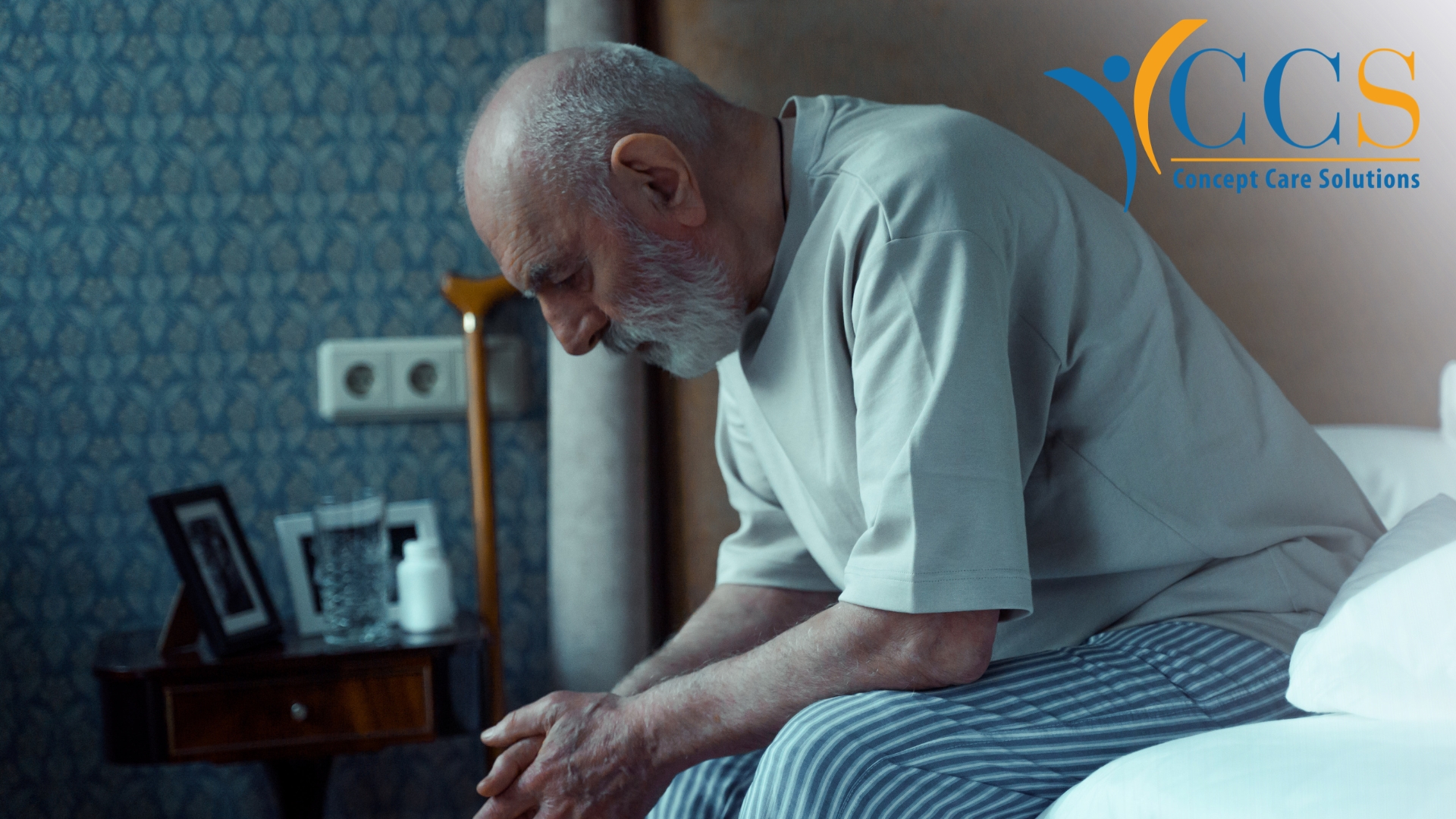
There are several ways in which people transition into the social care system, but unfortunately, the most common entry point to home care is following a stay in hospital.
Many families have experienced this story before; their loved one is increasingly struggling without a care and support plan in place, and whilst they will do everything they can, there is a fall, an injury or an illness that means they need to be taken to the hospital.
Once there, it often becomes clear either because of the hospital stay or a care needs assessment that occurs as a result that they need additional support.
The discharge process is a complex transitional stage, and you and your loved one will have a lot of difficult emotions to process as care is arranged to ensure they can leave the hospital safely.
To help with this, here is a guide to the discharge process, when people are discharged, what happens when your loved one is discharged and how a care and support package is devised to ensure that they do not return to the hospital.
What Is The Hospital Discharge Process?
When your loved one is admitted into the hospital, their treatment plan will be discussed with them and any carers or family members who have permission to be involved to ensure they fully understand the process, including when and how your loved one will go home.
The exact process of being discharged from the hospital will vary slightly from hospital to hospital, but in general, there are two types of discharge you will receive:
- – A minimal discharge is a discharge without a care plan, or where only minimal care and recovery are needed following a hospital stay.
- – A complex discharge, which involves the establishment of a care and support plan.
In most cases, when we talk about discharges, we are discussing complex discharges and a transition of care from hospital staff, doctors, and nurses to either a residential care home or a domiciliary care team.
What Happens During The Discharge Process?
- – Your loved one’s medical team will assess their physical and mental health, mobility, ability to look after themselves, do daily activities and live life the way they want, factoring in existing unpaid care.
- – Once the medical team agrees that it is safe for your loved one to return home, a discharge assessment will take place.
- – This discharge assessment will involve the establishment of a reablement package, home adaptations and/or a full social care package as and when your loved one needs them.
- – It can sometimes involve transitioning to a step-down bed or a reablement plan before the assessment is complete. This is known as a discharge to access approach.
- This could involve a financial assessment and a carer’s assessment to ensure that your loved one is helped as much as possible.
- – Your loved one’s GP will be involved and made aware of any care plans.
- – The discharge day and time are arranged so that any special equipment, travel arrangements and contact details are made available.
Why Is Social Care Often Arranged In Hospital?
Social care needs assessments can be applied for at any time, and a care and support package can be implemented as soon as it is required; there is no need for someone to be admitted to hospital before a care package can be agreed to, and carers are available to take care of your loved one.
In some cases, such as people who are diagnosed with progressive diseases such as dementia, Parkinson’s disease or multiple sclerosis, the condition may reach a point where it becomes clear and evident that your loved one needs additional support beyond what the family can provide by themselves.
However, many people are fiercely independent and want to take care of themselves, which means that the point at which it becomes clear that they need additional help and support can be after a fall, injury or serious illness, which requires hospitalisation.
A discharge is only successful if it avoids readmission into hospital, which means that a proactive approach is vital to ensure that everyone, from your loved one, their family, their carers, your GP and any other doctors and nurses coordinating care, can ensure they safely move from hospital into a system where they are adequately supported.
When Are People Typically Discharged From Hospital?
Discharge policies can vary from hospital to hospital, and whilst there are some general elements which will remain consistent from hospital to hospital.
Generally, a person will only be discharged from the hospital:
- – When the consultant declares that they are medically fit to do so.
- – When it is safe for them to be discharged
- – When they have received their discharge plan, with written information about the support they will receive during and following their discharge.
A care and support plan must be in place, they must have a way to get home safely, have any equipment they need to stay at home safely, have suitable clothes to get home in for the weather, and additional care and support they need as soon as they return should be in place.
As well as this, discharges typically take place before noon, in order to ensure they have plenty of time to ensure your loved one is comfortable and safely back at home before evening.
How Can Families Prepare For Discharge?
Family support is a key part of ensuring that your loved one can safely transition from the hospital back to their own home, and much of this support will be helping with basic needs, bringing anything that your loved one needs to the hospital and helping carers get up to speed.
Every part of this is vital, and much of it is helping with basic needs such as:
– Bringing a suitable change of clothes to travel home comfortably in.
– Making sure your loved one has their front door key, or carers have access to the home as well, to ensure they can safely make their way back in.
– Arranging travel, whether that is booking a taxi or arranging a lift with friends or family members.
– Making sure your loved one has any equipment they need, such as walking frames, sticks or wheelchairs.
– Making the bed ready for when they return.
– Switching the heating on if it is cold.
– Clearing away any slips or trip hazards.
– Getting a meal ready for them to eat when they get back.
All of this is coordinated between the hospital, carers and family and friends to ensure that they get home safely.